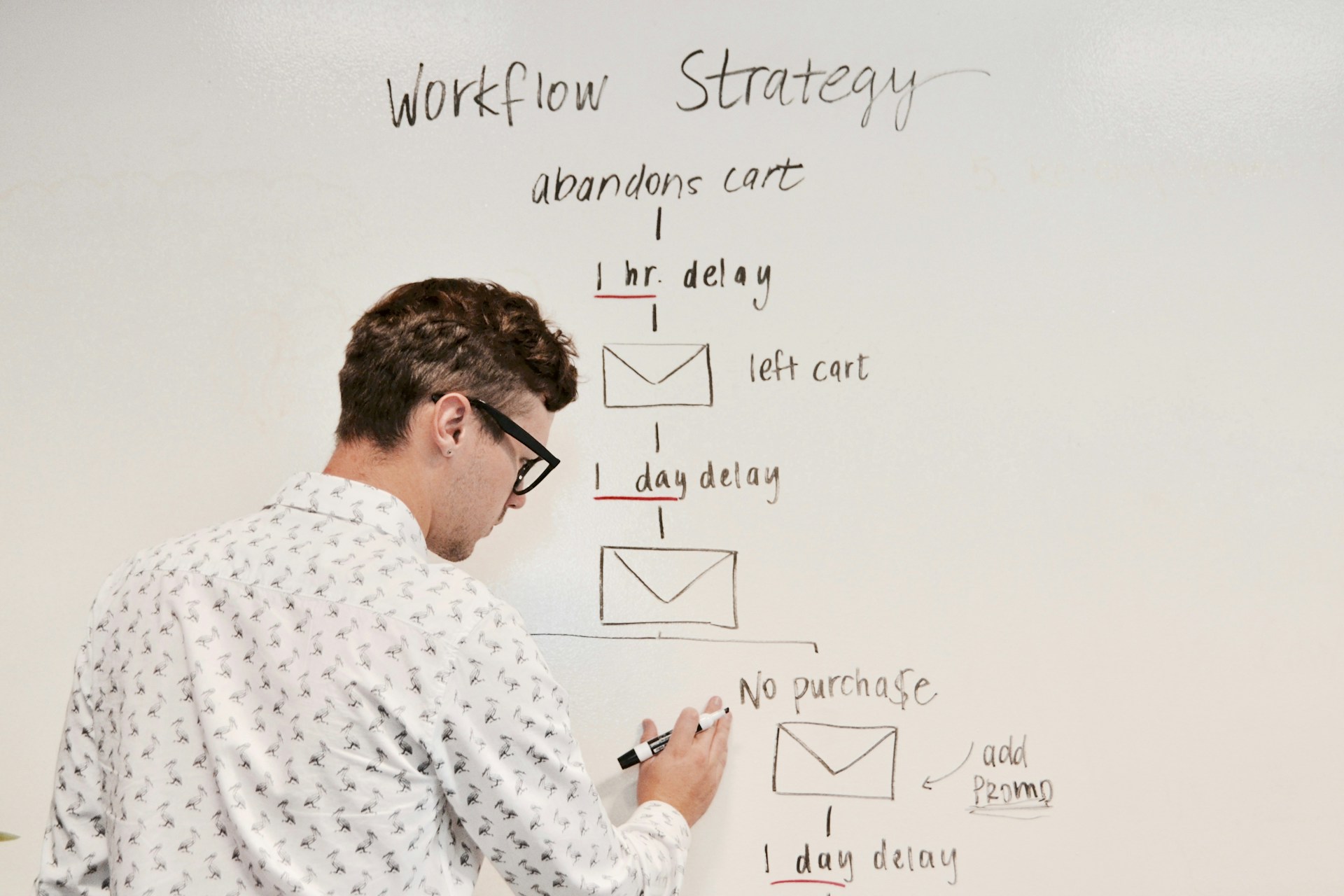
The manual vs automated creator workflow gap is widest at briefing and content review — the stage with the most moving parts and the most communication channels.
Note: Examples below are illustrative and based on general industry patterns. Actual time and cost figures vary by team size, campaign scope, and market context.
If you’ve ever spent a Tuesday morning forwarding a content brief to twelve different creators via email — then realizing you sent the wrong version to three of them — you already know the problem.
The manual vs automated creator workflow debate isn’t really a debate anymore. It’s a question of when your brand will make the switch, and how much time you’ll lose before you do.
This post maps the exact stages of a creator campaign where manual workflows bleed the most time — and what the same process looks like when it’s automated.
Why Does the Manual vs. Automated Creator Workflow Gap Matter So Much in 2026?
The creator economy has grown faster than most brand workflows have adapted. Brands that once managed 3–5 creators per campaign are now running 20–50. The tools haven’t kept up.
When you compare a manual vs automated creator workflow side by side, the difference isn’t just speed — it’s visibility, consistency, and the ability to scale without proportionally growing your team. Manual workflows scale linearly: every new creator adds a roughly equal amount of coordination work. Automated workflows don’t. Add 10 creators to a platform-managed campaign and your admin time barely changes. Add 10 creators to a spreadsheet-managed campaign and someone’s weekend disappears.
For a full breakdown of how these hidden costs accumulate across the campaign lifecycle, see our complete guide to the hidden cost of manual creator management.
Stage 1: Creator Discovery — Where Manual Workflows Lose the First Hours
Manual: A coordinator searches Instagram, TikTok, or YouTube by hand, pulling profiles into a Google Sheet. Engagement rates are checked manually. Follower counts are logged. Audience demographics are guessed. For a campaign targeting 15 creators, this stage alone takes 6–10 hours — and the data is stale by the time the campaign launches.
Automated: A platform surfaces creators based on filtered criteria — niche, engagement benchmarks, audience demographics, location, past brand partnerships. A list of qualified candidates is ready in 30–45 minutes.
Where brands waste the most time here: Re-vetting creators discovered weeks earlier, because manual records go stale. Platforms with live data eliminate this entirely.
Stage 2: Outreach and Contracting — The Manual vs. Automated Creator Workflow Gap Widens
Manual: Individual DMs or cold emails go out one by one. Follow-ups get lost in inboxes. Contract drafts are attached as Word documents, emailed back and forth for revisions, and signed via scanned PDF — or worse, not at all. For 15 creators, this stage routinely runs 8–12 hours.
Automated: Outreach goes through templated messages with tracked delivery and response status. Contracts are generated from standardized templates, sent digitally, and signed in the platform. The entire stage takes 1–2 hours.
Where brands waste the most time here: Contract revision cycles. Manual back-and-forth on deliverables, payment terms, and usage rights can add days to campaign timelines. A standardized template removes 80% of this friction.
Stage 3: Briefing and Content Review — The Messiest Part of Any Manual Workflow
This is where the manual vs automated creator flow comparison gets painful.
Manual: Briefs are attached to emails — different versions, different creators, different coordinators. Creators submit content via WhatsApp, email, Google Drive, or sometimes a direct DM. Review happens across five different platforms simultaneously. Feedback is scattered. Revision requests get misread or missed. Version control is a myth.
Automated: Briefs are delivered in-platform with read confirmation. Creators submit content through the same system. Feedback, revisions, and approvals all happen in one threaded view. Every coordinator sees the same information in real time.
Where brands waste the most time here: Revision cycles caused by brief confusion. When creators receive vague or inconsistently delivered briefs, the first submission is rarely approvable. Centralized briefing cuts revision rounds significantly.
Stage 4: Payment and Reporting — Where Manual Errors Compound
Manual: Payments go out individually via bank transfer, GCash, or PayPal — often from a spreadsheet with creator payment details that someone updates by hand. Errors happen. Duplicate payments, missed creators, incorrect amounts. Post-campaign reporting means screenshotting analytics, pasting them into a deck, and hoping the numbers are current.
Automated: Payments are triggered by content approval, processed in batch, and logged automatically. Reporting dashboards pull performance data in real time — no screenshots, no slide-deck marathons.
Where brands waste the most time here: Payment follow-up. Creators who haven’t been paid reach out. The finance team investigates. The coordinator re-checks the spreadsheet. This loop can consume hours per campaign and damages creator relationships in the process.
What Does the Full Time Comparison Look Like?
For a 15-creator campaign, the manual vs automated creator workflow time difference breaks down roughly like this:
| Stage | Manual (hrs) | Automated (hrs) |
|---|---|---|
| Discovery | 6–10 | 0.5–1 |
| Outreach & Contracting | 8–12 | 1–2 |
| Briefing & Content Review | 8–12 | 2–3 |
| Payment & Reporting | 5–8 | 1–2 |
| Total | 27–42 hrs | 4.5–8 hrs |
That’s a 60–80% reduction in coordination time — per campaign. For brands running multiple campaigns per month, the savings compound quickly into the equivalent of reclaimed full-time headcount.
Key Takeaways
- The manual vs automated creator workflow gap is widest at briefing and content review — the stage with the most moving parts and the most communication channels.
- Discovery and contracting are the easiest stages to automate first and deliver the fastest time savings.
- Manual workflows scale linearly; automated workflows don’t — making the ROI of automation higher the more campaigns you run.
- The real cost of manual workflows isn’t just time. It’s the delayed launches, the creator relationship damage, and the incomplete reporting that follows.
- Even partial automation — centralizing just one or two stages — produces meaningful reductions in coordination overhead.
Conclusion
The manual vs automated creator workflow question has a clear answer at every stage of the campaign. Manual workflows bleed time at discovery, contracting, briefing, and reporting — and the losses compound as campaign volume grows.
The brands building scalable creator programs in 2026 aren’t doing more work. They’re doing the same work in a fraction of the time, with better visibility and fewer errors.
Leave a Reply